Sunday, February 27, 2011

Using Depth of Field for Photography


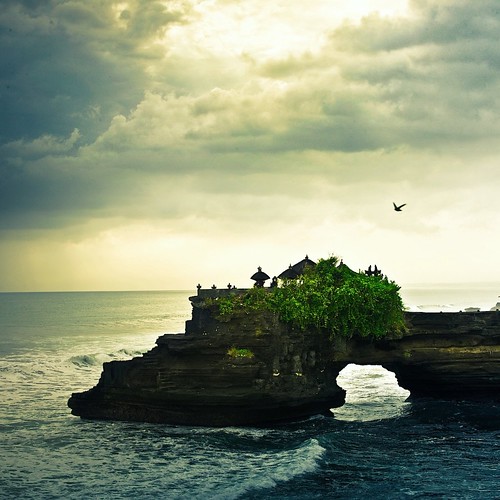
No Photography Please by Heaven`s Gate (John)


Photo Credit: celtics baby clothes


It's one of the greatest tools available to photographers, it's easy to use, and yet it's among the least known and used abilities of a camera today. Pro photographers have used it for decades, but the amateur can use these same techniques without paying the professional price. It's called depth of field, and it's accessed through the use of the aperture.

The aperture, simply put, is the hole that light comes through in your camera. Light passes through the front of the lens, through a series of glass pieces, through a hole at the back of the lens, and into the camera. The aperture is the hole in the back of the lens, and you get to control this vital part of the camera, if you decide to want to bump up your pictures. You can place the camera on auto, and the camera will adjust its aperture, shutter and more to the situation it sees. By placing the camera in more manual modes, you take on powerful and personal control, and YOU get to decide what you want to create with your photographs.

An important factor here is lighting. Any photography relies heavily on the lighting that you are using, whether it be from the natural, ambient light around you, or artificial light, like a strobe or other flash unit. Especially while using natural light, it will be important to use a tripod to keep the camera steady while shooting. If you are shooting on a cloudy day, without much light, then the camera must compensate for less light by having a longer shutter speed, which it will do automatically in the mode I'll be explaining in a moment. A longer shutter speed means the camera won't be able to have a clearly focused picture without the use of the tripod.

Depth of field simply means the area of focus, or the area in the picture that is in focus might be a more accurate term. Photography is a two dimensional medium, having height and width, but it lacks depth, the third dimension. Your photography can create the illusion of that depth through a few easy camera settings. You may be asking yourself, why would I want to create the illusion of depth, and what is it good for? Part of the reason is to create a sense of emphasis. When you take a picture of a large area, with trees, birds, squirrels, people, rocks, etc, what is the thing or object that you are zeroing in on? Is there anything that you really want to emphasize to your viewer? If so, it's probably getting lost in the crowd of other things on the scene. The squirrels are so small you can barely see them, the people are walking their dogs, and the trees are swaying in the breeze. But what if you wanted to focus on the viewer on the flowers in the garden? When you create emphasis on an object, it strengthens your photo, and actually guides the eye of the viewer to that object. You could take pictures to create a story about that, as you can read in my article about photo stories. When you get in to take close-ups of the flowers is where the possibilities of great photography begin.

Emphasize the garden by focusing in on one or two flowers at a time. Grab a tripod, get down to eye level with them, and then get ready. Place your camera in a mode that allows you to change your aperture; the mode is usually called "A", or "AV" on some models. Film cameras can allow these changes too, on SLR models. They require you to simply change the f-stop manually on the aperture ring. On your digital camera, use your selector buttons to change your aperture. You'll see on your digital camera, most likely, a letter f, with the number on the readout on either the monitor, or the info panel on the top of the camera, or perhaps both areas. The f means f-stop, which is the name commonly used to describe the number of the aperture setting. The best way to emphasize a flower is to have only that flower in focus, and to have the rest out of focus. Change your aperture to a really low number, such as 2.8, 4, or 5.6. When the lens is at a low number like this, the lens hole is wide open, but it is creating a small area or depth of field; basically an inch or two will be in focus. Focus your camera, and shoot. Now, look at the camera, and look at your pictures. The one or two flowers should be in focus, but do you see how the background is fuzzy and out of focus? This is what is called a "shallow depth of field", and that comes from using a small number f-stop. That's because you've taken control of your camera, and changed the outcome! Because only the flower is in focus, and the rest is blurred out, you have guided your viewer to what YOU want to emphasize! You have used one of the most powerful tools available for a photographer to bring a new focus to your pictures. Try this with a lot of different scenes; look how the item is forced to really stand out for you because it's the only thing in focus.

Now, on the opposite end of the spectrum are the pictures that have the entire photograph in focus; such as a lighthouse standing out from the beach, with horseshoe crab shells in the immediate foreground. This is also done by changing the depth of field of your camera. Here, you again change your aperture, but this time place it on a high number like 16, 22, 28, etc. This is to create a large depth of field by using a small hole in the back of the lens. Again, you must use a tripod to keep the camera steady. Take a picture with something in the near foreground, such as a rock or the crab shells, and then compose your picture with a mountain or some other object some distance away, focus, and shoot. Remember to use the rule of thirds here for additional emphasis. As you'll see, both areas should be in focus, again showing the third dimension and creating the illusion of depth. This is a large depth of field.

It's a little known tool in the photographer's toolbox, but almost any camera made in the past four years will have some sort of ability to work with depth of field, whether they have a point and shoot or DSLR. Every photographer, of every level, has the ability, through practice, to create beautiful photographs that can rival those of the pros, by using the tools available with every camera. Use the strength of depth of field when you create the third dimension in your photographs, and add a new and incredibly
powerful personal dimension to your photography.

Using Depth of Field for Photography


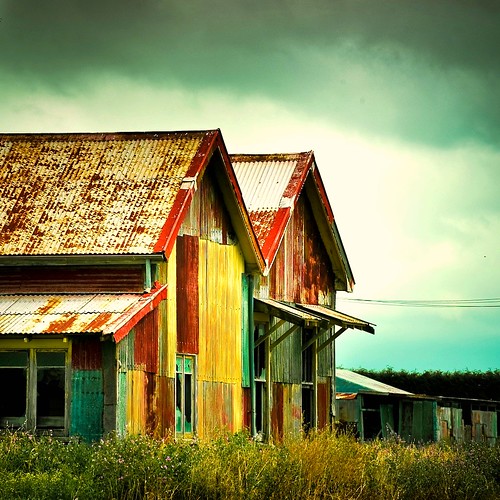
Cuba Gallery: New Zealand / landscape / color / texture / background / buildings / photography by ►CubaGallery


photo source


It's one of the greatest tools available to photographers, it's easy to use, and yet it's among the least known and used abilities of a camera today. Pro photographers have used it for decades, but the amateur can use these same techniques without paying the professional price. It's called depth of field, and it's accessed through the use of the aperture.

The aperture, simply put, is the hole that light comes through in your camera. Light passes through the front of the lens, through a series of glass pieces, through a hole at the back of the lens, and into the camera. The aperture is the hole in the back of the lens, and you get to control this vital part of the camera, if you decide to want to bump up your pictures. You can place the camera on auto, and the camera will adjust its aperture, shutter and more to the situation it sees. By placing the camera in more manual modes, you take on powerful and personal control, and YOU get to decide what you want to create with your photographs.

An important factor here is lighting. Any photography relies heavily on the lighting that you are using, whether it be from the natural, ambient light around you, or artificial light, like a strobe or other flash unit. Especially while using natural light, it will be important to use a tripod to keep the camera steady while shooting. If you are shooting on a cloudy day, without much light, then the camera must compensate for less light by having a longer shutter speed, which it will do automatically in the mode I'll be explaining in a moment. A longer shutter speed means the camera won't be able to have a clearly focused picture without the use of the tripod.

Depth of field simply means the area of focus, or the area in the picture that is in focus might be a more accurate term. Photography is a two dimensional medium, having height and width, but it lacks depth, the third dimension. Your photography can create the illusion of that depth through a few easy camera settings. You may be asking yourself, why would I want to create the illusion of depth, and what is it good for? Part of the reason is to create a sense of emphasis. When you take a picture of a large area, with trees, birds, squirrels, people, rocks, etc, what is the thing or object that you are zeroing in on? Is there anything that you really want to emphasize to your viewer? If so, it's probably getting lost in the crowd of other things on the scene. The squirrels are so small you can barely see them, the people are walking their dogs, and the trees are swaying in the breeze. But what if you wanted to focus on the viewer on the flowers in the garden? When you create emphasis on an object, it strengthens your photo, and actually guides the eye of the viewer to that object. You could take pictures to create a story about that, as you can read in my article about photo stories. When you get in to take close-ups of the flowers is where the possibilities of great photography begin.

Emphasize the garden by focusing in on one or two flowers at a time. Grab a tripod, get down to eye level with them, and then get ready. Place your camera in a mode that allows you to change your aperture; the mode is usually called "A", or "AV" on some models. Film cameras can allow these changes too, on SLR models. They require you to simply change the f-stop manually on the aperture ring. On your digital camera, use your selector buttons to change your aperture. You'll see on your digital camera, most likely, a letter f, with the number on the readout on either the monitor, or the info panel on the top of the camera, or perhaps both areas. The f means f-stop, which is the name commonly used to describe the number of the aperture setting. The best way to emphasize a flower is to have only that flower in focus, and to have the rest out of focus. Change your aperture to a really low number, such as 2.8, 4, or 5.6. When the lens is at a low number like this, the lens hole is wide open, but it is creating a small area or depth of field; basically an inch or two will be in focus. Focus your camera, and shoot. Now, look at the camera, and look at your pictures. The one or two flowers should be in focus, but do you see how the background is fuzzy and out of focus? This is what is called a "shallow depth of field", and that comes from using a small number f-stop. That's because you've taken control of your camera, and changed the outcome! Because only the flower is in focus, and the rest is blurred out, you have guided your viewer to what YOU want to emphasize! You have used one of the most powerful tools available for a photographer to bring a new focus to your pictures. Try this with a lot of different scenes; look how the item is forced to really stand out for you because it's the only thing in focus.

Now, on the opposite end of the spectrum are the pictures that have the entire photograph in focus; such as a lighthouse standing out from the beach, with horseshoe crab shells in the immediate foreground. This is also done by changing the depth of field of your camera. Here, you again change your aperture, but this time place it on a high number like 16, 22, 28, etc. This is to create a large depth of field by using a small hole in the back of the lens. Again, you must use a tripod to keep the camera steady. Take a picture with something in the near foreground, such as a rock or the crab shells, and then compose your picture with a mountain or some other object some distance away, focus, and shoot. Remember to use the rule of thirds here for additional emphasis. As you'll see, both areas should be in focus, again showing the third dimension and creating the illusion of depth. This is a large depth of field.

It's a little known tool in the photographer's toolbox, but almost any camera made in the past four years will have some sort of ability to work with depth of field, whether they have a point and shoot or DSLR. Every photographer, of every level, has the ability, through practice, to create beautiful photographs that can rival those of the pros, by using the tools available with every camera. Use the strength of depth of field when you create the third dimension in your photographs, and add a new and incredibly
powerful personal dimension to your photography.
Saturday, February 26, 2011

Boppy Pillow Photography Prop


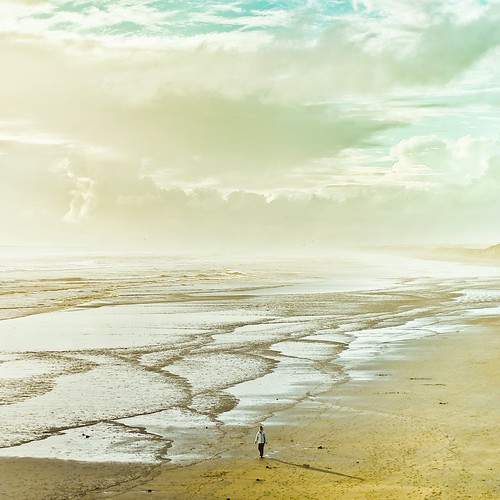
Cuba Gallery: New Zealand / landscape / clouds / amazing / sky / ocean / beach / sea / photography by ►CubaGallery


source,photo credit


Photography props are expensive and many times are not even worth the investment. A Boppy Pillow however, even if bought at full price, is well worth the investment. You will get years of use from your Boppy Pillow and as a photography prop the Boppy Pillow can be used for babies and pets. The Boppy Pillow is also washable so it can be cleaned inbetween uses. You can purchase Boppy Pillows new at stores such as Target or used at resale shops and rummage sales.

Boppy Pillow Photography Prop Pose #1: Baby On Back
Place the Boppy Pillow on the floor of coffee table or other raised surface, not to high since you will be photographing from above. Cover the Boppy Pillow with a backdrop, blanket, material, etc. Gently rest the upper body of the baby on the Boppy Pillow, the baby's bottom should be near the open end. This position is perfect for newborns that can not support themselves.

Boppy Pillow Photography Pose #2: Baby on Tummy
Prepare the Boppy Pillow as above on a raised surface. For this pose the table can be high or low since you will be photographing from in front of the baby. For this photography pose you will be facing the open end of the Boppy Pillow away from the camera. This pose does require some upper body strength so it works best for babies 2 months and up. Place the baby stomach down with the upper body resting slightly forward of the Boppy Pillow. You now have a perfect head and shoulders position.

Boppy Pillow Photography Pose #3: Baby Sitting
Prepare the Boppy Pillow as described in pose 1. As in pose 2 the raised surface can be high or low since you will be photographing from in front of the baby. The Boppy Pillow opening should be facing the camera. Sit the baby inside the hole with the baby's legs coming out the opening. The Boppy Pillow will help support babies that can sit unassisted. In this pose the Boppy Pillow is mainly used to keep the baby sitting tall. Photograph the baby from the front. This pose will help you capture a nice head and shoulders photo of babies six months and up.

Boppy Pillow Photgraphy Pose #4: Pet Laying
Again prepare the Boppy Pillow as stated above. You will be photographing from in front of the subject so a high or low table will work. The Boppy Pillow opening should face to the left or right of the camera. Lay the pet with the front paws on the Boppy Pillow. The body should be laid into the center and if large enough out the opening. Stand behind the camera in front of the subject and get the pet to turn their head towards the camera. I use a rubber chicken, not a squeaker toy. A squeaker toy will scare most animals and usually makes a dog jump up and want to play. You only want to get the animal to look in your direction with their head.

I have included a couple of photos that show the Boppy Pillow in use.

Digital Photography Home-Business Opportunities


Cuba Gallery: Indonesia Bali / summer / landscape / sky / clouds / wave / water / sunset / ocean / sea / photography / buildings by ►CubaGallery


credit


For the next seven years, digital photography is forecasted to remain steady as a job opportunity for those that are interested in this field. While the competition is expected be strong amongst photographers and the demand for jobs will fall below the number of photographers there are expected to emerge in this field.

The most successful photographers exhibit traits in being creative, able to adapt rapidly to technology changes, and management proficiency. There are digital photography business courses available to help you gain the competitive edge. You will be able to start your own full or part-time business when you develop a good business sens and keep up-to-date on the rapidly changing technology.

There are many areas that you can pursue in a digital photography home business. I will cover a few of the areas for digital photography businesses.

Real Estate
Each year there are millions of homes sold in the US and real estate agents use at least one picture to advertise the property online, in magazines, in brochures, and in newspapers. As a digital photographer you could earn $50 to $100 a house working with real estate agents or others involved in real estate.

Portraits
There are many locations that you can use for a photo shoot. Many people like to have a professional portrait done of themselves for various reasons. The common charge for a shoot is $100 per hour and an additional $50 to $100 for prints and enlargements. There is also a strong demand for pet and children's portraits.

Sports
Being a photographer for sporting events can be profitable and exhilarating. As a sports photographer, you can submit your photos to event organizations, to participants and publications, local news agencies, and a variety of other types of news and sporting sites. The local minor league teams could pay $50 to $200 for team photos with extra sales potential for prints, premium items such as photo trading cards, T-shirts, and reprint. Do not forget your local school teams either as there is a hidden potential for a photo shoot for these teams.

Commercials
Every year there are billions of dollars spent on product advertisements. Commercial photography is normally limited to the more experienced photographers who can charges as much as $2,500 a day for high end product shots. There is also an opportunity for those that can also do shoots for the local chamber of commerce for their websites, local businesses for websites, and a wide array of other ways to earn as a commercial photographer.

Glamour
There are many beauty salons, hair dressers, and modeling agencies that use photos to help promote their services and products. While it is not uncommon for them to pay more than $150 an hour for promotional shoots with images that can be used for brochures, online advertising, point of sale materials, and business cards. There is an opportunity for those that wish to have photos of their staff and customers photographed for in house promotions or for conventions.

Stock Photography
There are agencies that specialize in stock photos that they resell to business for promotional purposes. For you to have your work listed with them they normally require a minimum submission of 300 to 500 photographs. As a stock photographer you can submit photos such as travel photos, landscape, people, animals, still life, and various other types of images that will appeal to their customers. The commissions for stock photographers can range from $5 to $100 for images that their customers purchase through their agencies.

News and Events
Many local newspapers, magazines, and newscasts often look for interesting human interest stories and pictures. The requirements for each of the types of periodicals will vary, but it is possible to have your pictures published, receive credit as a tag line, and possibly a payment for your photo.

Wedding Photography
There are photographers who will establish a wedding package of 25 to 40 prints that will retail for $1,500 to $3000. Normally this a type of shoot will take two days to work, the first day is to shoot the event and the second day is to process and prepare the album.

Graduation
There are parents who wish to have a professional photograph took of their graduate walking down the aisle and across the stage at graduation. The charges for photos could range from $5 to $10.